
The Weight of Unsaid Words, and a potato.
Sometimes, the most profound moments in therapy happen in the quiet, in the space between the words. This fictionalised case study, a composite of many sessions, explores the “dance” between therapist and client, and why, occasionally, a therapist might find themselves thinking about a jacket potato right in the middle of a breakthrough.
The Session
He sat before me: a broad man who had filled my doorway, yet somehow now, managed to look slight. Toes pointed in, one hand wringing the other. I wondered if everyone met this version of him, or if this vulnerability was an offering he only brought to this room.
Up until now, he hadn’t really told his story. We’d had a couple of sessions where he’d charted the map of his life. I’d “umm’ed” and “ah’ed” in the right places, but truth be told, I hadn’t felt truly engaged. We were still in the shallows.
Today felt different. We’d done the standard hellos and check-ins. I’d poured water into the IKEA glasses, the ones with the rounded bottom that feel so nice in the hand. We commented on the early Spring weather (frost? sunshine? who knows!) and the ongoing struggle with early morning traffic. Then, he took off his watch and dropped it to the floor.

I exhaled, tucking a leg up as the tone shifted. The threshold was crossed. Tucking a hand under my knee, I briefly wondered if I’d ever get that small stain off my trousers.
His shoulders dropped. The anxiety hadn’t gone, but a sense of inevitability, a resigned weight, settled into the room. Surprisingly, tears pricked at the corners of my eyes. They wouldn’t fall (they’re well-trained), but they had arrived before the words. My body knew this moment had significance before my mind did.
Time seemed to slow. It was only a few minutes, but the anticipation made the air languid, time thick. Ambient sounds fell away until the pitch of his breath filled the space. I was acutely aware of my own heartbeat.
I could have a tuna jacket potato for lunch, I thought. Then, I caught myself. Why had my mind wandered? I scanned his body language; he was fully in the moment, eyes low, processing. He certainly wasn’t thinking about potatoes. I realised my brain was likely seeking a “micro-break” from the weight of the unsaid.
Head still low, voice a whisper: “I’ve never talked about this before.”
My mind buzzed. If I spoke, would I break the spell? Would I stop the flow, or would a word help him feel held? Interrupt or validate? Interrupt or validate? I settled on a quiet compromise: “Hmm.”
We waited. The silence was thick. He wasn’t in the room anymore; he was in a memory. He shifted, took a sip of water, and cradled the glass, swirling the liquid round and round. His left knee began to bounce, nervous energy spilling over. Suddenly, he set the glass down on the floor by his feet, bypassing the coffee table entirely.
“It was shit, you know?” His voice was a touch too loud, and he looked shocked at his own volume. “Sorry.”
I offered a small, dismissive smile, no apology needed, but kept my mouth shut. He returned a smile that was heavy with sadness.
“I never wanted to turn into him. But I’m scared it’s in me.”
Another blanket of silence. Slow breaths, this time I felt I was modelling them, some calm. I sensed the shadow of his father in the room, a hint of aggression he’d alluded to in earlier sessions. Before I could weave a narrative in my head, I paused. I chanced a question, debating internally if I was clarifying for my own curiosity, or for the work.
“Turn into who?”
He looked up, his face wrecked. “My Dad.”
We sat with that.
The clock over his shoulder was ticking down; we were running out of time. I felt that familiar clinical tension: I didn’t want him sinking into a complex, painful story just as he had to go out and drive home.
“You’ve visited a difficult memory today,” I said gently. “Can I check in with how that feels?”
The question carried the unspoken “it’s nearly time to go.” He took the hint, glancing at the clock with a heavy exhale.
“Thank you. You’ve been patient. I think I’ll be able to tell you more next time.” He paused. “It feels... I don’t know. Like everything and nothing at once.”
“And between now and the next session?” I asked. “Where will the memories go?”
He looked up, confused.
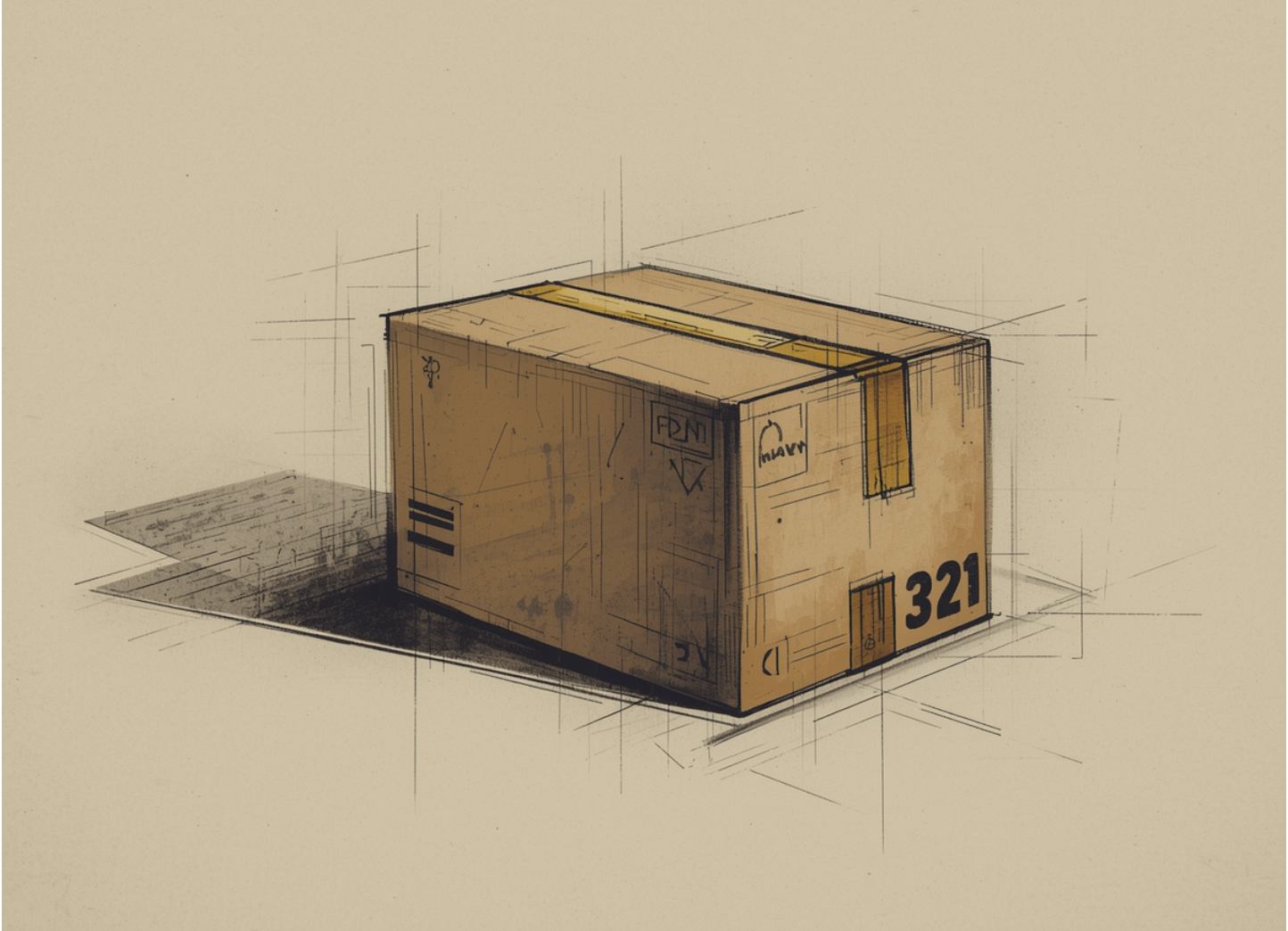
“Back in their box,” he eventually said, a small chuckle surfacing. “With a bit of gaffa tape. Probably not healthy, eh?”
“Actually, short-term storage is absolutely fine,” I smiled. “If anything pops out before next week, just put it to one side for me.”
He walked out looking a little lighter on his feet, filling the doorway again with those broad shoulders. As the door clicked shut, I shook off the energy, feeling the tension roll off my back. This was going to be a profound piece of work.
Later, I passed a PT from the floor below. I was mid-yawn. “Tired from sitting down all day?” he laughed. There was no malice in it. I just smiled back.
The Clinical Undercurrent: What was actually happening?
In therapy, the “invisible labour” is often the most exhausting part. Here are three processes illustrated in the story:
1. Somatic Countertransference: The “Tuning Fork”
The therapist’s tears “arrived before the words.” This is somatic countertransference, when the therapist’s body resonates with the client’s unspoken or repressed emotions. In research, this is often called the “Analyst as a Tuning Fork” (Stone, 2006).
2. Dissociative Defence: The “Jacket Potato” Circuit Breaker
The sudden thought about lunch isn’t boredom; it is a dissociative defence (or micro-dissociation). When the emotional atmosphere in the room becomes “high-affect” and heavy, the therapist’s brain may trip a circuit breaker, flicking to something mundane and safe to avoid being overwhelmed. We are all susceptible to this, even in daily life, and often notice it in processing grief.
3. Containment: The “Gaffa Tape”
Wilfred Bion’s concept of Containment is shown here. The client brings raw, “unbearable” feelings. The therapist acts as the container, taking those fragments and making them feel safe enough to “put in a box” so the client can drive home.
“We aren’t just ‘sitting there.’ We are processing, resonating, and occasionally fighting the urge to think about lunch. This invisible labour is partly what makes the work therapeutic.”
About the Author: Helen Gifford is a counsellor, supervisor, and author of ‘A Practical Guide For Working Therapeutically with Teenagers and Young Adults’.
Support this work: 📕 Order the Book: A Practical Guide for Working Therapeutically with Teenagers and Young Adults ☕ Buy me a toasted teacake: Ko-fi 🌿 Work with me: Clinical Supervision and Training via www.branchcounselling.co.uk
Note: This is a fully fictitious story to illustrate an experience many professionals face; no confidentiality has been broken. Although I do often think about jacket potatoes.
References:
Stone, M. (2006), The analyst’s body as tuning fork: embodied resonance in countertransference. Journal of Analytical Psychology, 51: 109-124. https://doi.org/10.1111/j.1465-5922.2006.575_1.x
Riesenberg-Malcolm, R. (2001) "Bion's theory of containment." In C. Bronstein (Ed.), Kleinian theory: A contemporary perspective (pp. 165–180).