
The Sales Pitch vs. The Therapy
One for the practitioners.
I have spent a significant amount of time recently embroiled in the digital “comment sections” of our profession, where many are defending and challenging theories (Polyvagal, anyone?) in equal measure. Often, the defence is an emotional one: “We can’t discard a theory that has helped so many.” People are understandably passionate; when we witness a client’s distress transform into peace, the theory we used becomes personal.

Photo by Ian Schneider on Unsplash
But the problem isn’t the theory; it’s the absolutes.
I haven’t heard anyone claiming we should destroy practices or end established work. There is value in almost every model. The danger arises when “science” and “absolutes” are applied without scientifically viable proof. This is a problem of delivery: how theory is sold to us, and how we, as practitioners, are taught to consume it.
The SCoPEd Hierarchy of Thinking
In the UK, the transition from “learning a map” to “questioning the cartographer” is strictly gated. This experience isn’t an anomaly; it is baked into the very structure of our training. This is where I find myself at odds with the SCoPEd framework. By tiering critical thinking by qualification level, we have effectively turned “analysis and scepticism” into a luxury good.
Level 3 & 4: The Practitioner Phase
At the foundation, critical thinking is almost non-existent. We usually learn the “three cores”, Humanistic, CBT, and Psychodynamic, and are asked to reflect on our reactions, not the validity of the science. By Level 4, the goal is to produce a “safe, competent practitioner.”
Tutors often present their core model as a “complete truth.” The justification is that a trainee needs a “secure base” before entering their first placement. We are taught how to use the tool, but never why the tool might be blunt.
Level 5 & 6: The Comparative Phase
Here, research awareness begins to trickle in. Students may encounter the “Dodo Bird Verdict”, the idea that all therapies are roughly equal, and explore the potential flaws in research techniques. Yet, it remains an exercise in comparing models rather than deconstructing them. It’s dangerous for the provider; if the model doesn’t matter, their expensive, specialised curriculum becomes a lot harder to sell.
Level 7: The Master’s Luxury
Only at the Master’s or Doctorate level are practitioners finally invited to study Epistemology (how we know what we know). Here, you are encouraged to see the DSM-5 as a political document and the “shiny science” as a sales pitch.
I have a vivid memory of entering A-level Biology and being told the genetics we learnt at GCSE was essentially “wrong” because it had been so oversimplified. I felt tricked and irritated at the time - and I was only 17. Therapists in training are adults; I am sure they can handle the nuance at all levels.
Why are we gatekeeping this? By reserving critical thinking for the elite, we limit the thousands of practitioners who cannot afford a Master’s degree, forcing them to remain “Model Disciples” rather than autonomous thinkers.
The CPD Market: A Retail Experience
Outside of core training, we enter the “Wild West” of CPD. These providers are often private institutes built around a single modality. If an institute’s entire revenue depends on teaching their specific theory, they have a financial and brand-based incentive to keep the “sales pitch” shiny.
Courses lean on “science” and NICE guidelines to justify their existence, but rarely teach the politics of those guidelines, how certain models “win” the funding race because they are easier to measure, not because they are deeper. We are no longer students; we are consumers in a “retail experience,” buying certainty in the form of a certificate.
The Model in the Room: Two Sides of Dissonance
This lack of critical training creates a crisis at both ends of the career spectrum.
The Novice’s Failure: Imagine a newly qualified Level 4 practitioner armed with a folder of “proven” CBT techniques. On paper, this is the “gold standard.” But then they meet a client with a history of childhood abuse and a deep, systemic shame. The manual says this should work, but it doesn’t. Never taught to critique the model, the practitioner doesn’t think, “The model is insufficient for this complexity.” Instead, they think, “I am failing,” or worse, “The client is resistant.” Their “Theoretical Obedience” has become a barrier to the very connection needed for healing.
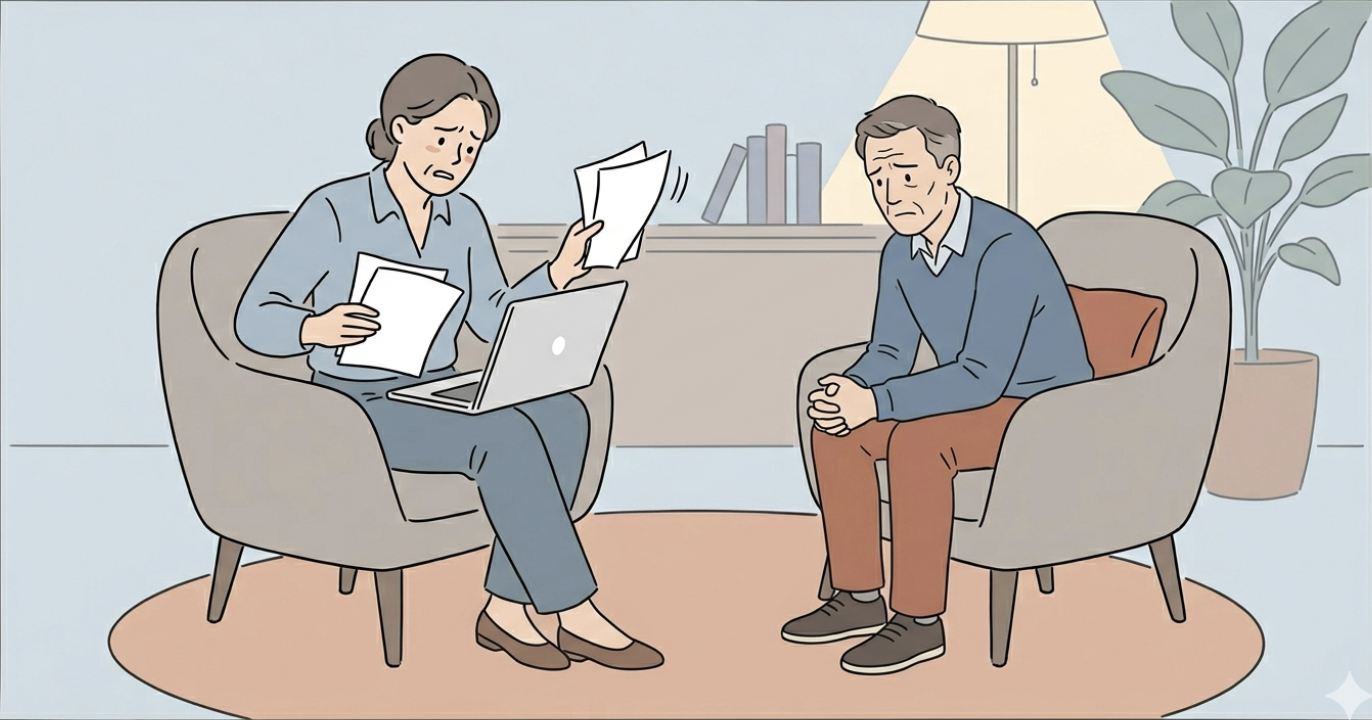
An AI generated image
The Veteran’s Crisis: Now imagine a practitioner with years of experience who has invested thousands in somatic work and Polyvagal Theory. They suddenly encounter the growing scientific debate regarding the validity of that theory. Unsure how to critically assess the evidence, they begin to doubt every client breakthrough they’ve ever had. A “sheen of shame” and anxiety fills them; they wonder if their entire career has been built on a lie. Because they were sold an “absolute,” the discovery of “uncertainty” feels like a personal failure of competence rather than a natural part of scientific evolution.
The Solution: Spreading the Wealth
There is a common argument: “If it works and helps the client, does the science matter?”Yes, it matters. Mis-selling theory limits the development of our field and undermines our practitioners. We don’t need to lose the theory, but we do need to remove the gloss.
We need to be honest: “We know this helps, and we have an idea why, but it is still in development.” That is enough. Psychology and therapy are in their infancy. There is so much scope to grow, and that isn’t scary, it’s exciting.
We need a shift in two key areas:
Early Epistemology: Introducing scepticism and critical analysis at Level 3. We are adults; we don’t need to be spoon-fed “absolutes” to begin our practice.
CPD Regulation: Creating stricter guidelines for what constitutes “evidence-based” training to prevent the commodification of certainty.
True competence isn’t found in the extra-shiny sales pitch of a new technique. It is found in a practitioner’s ability to question the “science,” embrace the uncertainty, and remain connected in the face of suffering.
It’s lovely to share a few quiet moments with you today.
Until next time,
💛🌿 Helen
About the Author: Helen Gifford is a counsellor, supervisor, and author of ‘A Practical Guide For Working Therapeutically with Teenagers and Young Adults’.
Support this work: 📕 Order the Book: A Practical Guide for Working Therapeutically with Teenagers and Young Adults ☕ Buy me a toasted teacake: Ko-fi 🌿 Work with me: Clinical Supervision and Training via www.branchcounselling.co.uk
Author Note & Transparency: All case studies or stories are fully fictitious to illustrate the experiences many professionals face; no confidentiality has been broken. I recommend resources based on a combination of clinical experience and consideration of available evidence. These are offered for interest only and are not endorsements of scientific efficacy or clinical recommendations. Please apply your own critical judgment.