
Beyond the Blank Slate
Belly laughter and the balance of how we show up - in and out of the room.
I reposted a meme on my Instagram some time ago comparing the standard expectations of a therapist - poised, nodding thoughtfully, some well-timed ‘hums’. Then a depiction of what some of us are actually like - big gasp, ‘really, oh my goodness!’, furrowed brows of concern, and occasional belly laughter. A client commented that the meme made them laugh, because it’s true - I can rarely hide what I am thinking.
Video inspired by perfectly_emmperfect on Instagram.
We have moved on from the Freudian couch and the clinical blank slate. We know that the therapeutic relationship is a human one; it relies on a genuine, authentic connection to have clinical value. If it were merely about delivering tools and applying scripts, then we certainly are replaceable by AI.
Our clients can’t feel heard, valued and validated by a well-timed, professional nod; they benefit from seeing that we are in the space with them. This congruence supports the relationship, but it also means that a gentle challenge can be received with true consideration rather than defence.
Holding Space
This relational congruence doesn’t mean I sit in the room as a friend; I am still holding the space, running through theories, tools, and helpful frameworks in the Rolodex of my mind.
Whilst eyes may glisten with empathy, I don’t sob with a client; the space is theirs and not one where they feel they have to hold or soothe me.
I may laugh at a well-timed joke, but not one that is a distraction or manufactured at their expense.
I work to monitor the bridge between my ethics and beliefs and theirs. I am honest, but I don’t offer information about my personal life; the story in the room is theirs.
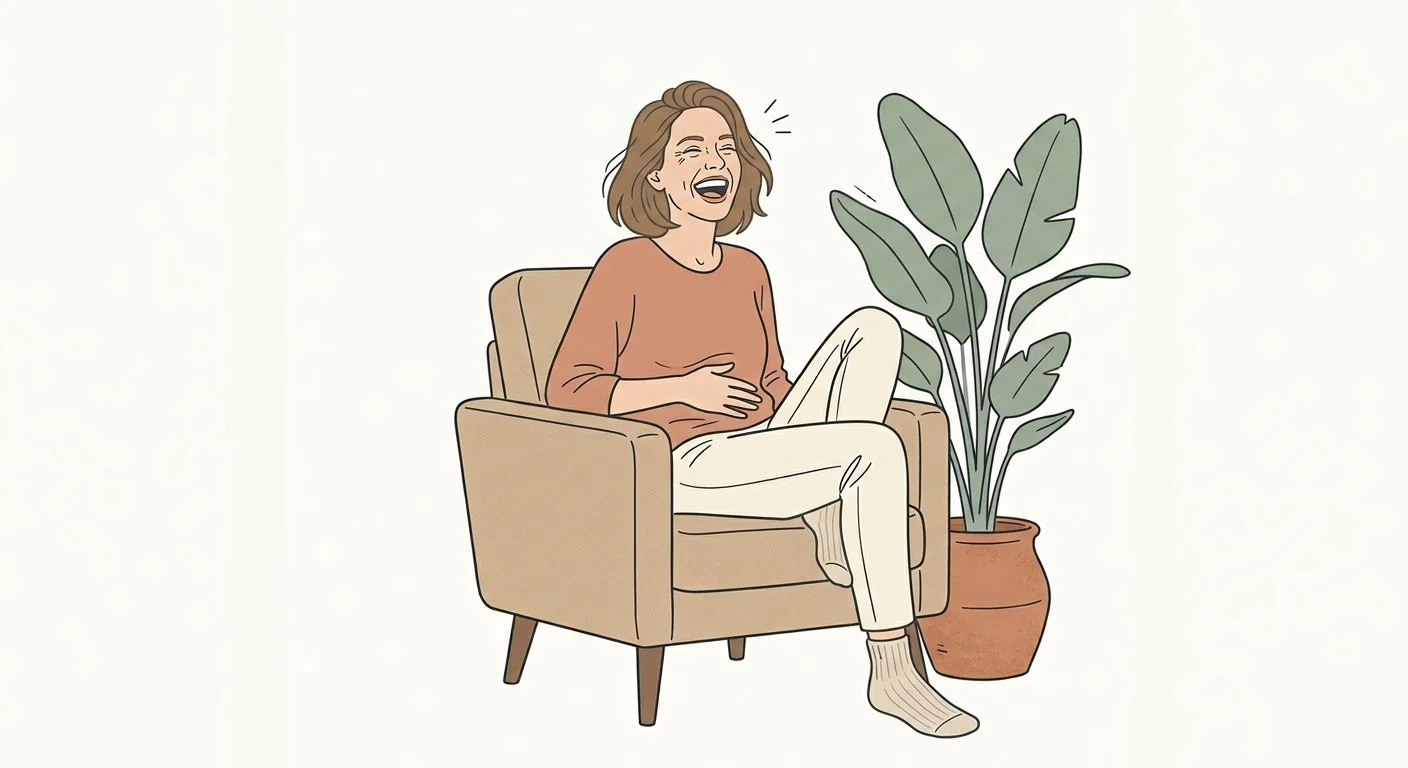
An AI-created image - a simple line drawing of a woman, belly laughing in a chair.
The emotion (and my face) is genuine, but that doesn’t mean that the space is not carefully curated and held for their work.
The Balance
This balance is something I reflect on regularly; I often think therapeutic work can feel so hard because there are few absolutes to rely on; every piece of work is different, and we are constantly assessing. This balancing act between relational and clinical that therapists navigate is everywhere in our work and our life. We juggle competing needs on all different levels.
Good Student or questioning mind? In training and CPD, we balance learning from those who are experienced practitioners and researchers - whilst not losing our critical and questioning mind.
Clinical labels or character traits? We absorb literature, webinars, articles and podcasts - but we also must remember not to over-intellectualise and lose trust in the therapeutic relationship.
Trauma webinar or Netflix drama? We invest in our practice and remain up to date with policies and developments, but also remember a work-life balance and continue to protect against burnout with time for self-care.
Polished acquaintances or messy friends? Our training changes our personal interactions, helping create healthy boundaries, protect us from harm and strengthen bonds, but we must also note that not every friendship needs analysing - a friend who is a good laugh is good enough!
Life is a juggling act
When we look at our clients, particularly teenagers and young adults, they are performing this same high-wire act every day: Young people balance a social life and education, whilst not forgetting their family, social media, part-time job, learning life skills...
English coursework, or bingeing that Netflix drama everyone is talking about?
Shopping trip with friends or visiting Grandma Betty?
Extra sleep or a good hair day?
Defend your friend or avoid the drama?
Working towards a 9 in maths or getting that pass in French?
And none of these considers extenuating circumstances: mental or physical health, minority group struggles, safeguarding or multi-agency input. Normal life takes a lot of balancing, day-to-day and systemically.
As parents, teachers, social workers - the same balancing act applies:
Promoting independence or safety.
Encouraging education or socialisation.
Protecting from harm or education about harm.
Giving them your time or taking time for yourself.
From Vigilance to Checkpoints
It would be easy to remain in a perpetual place of assessment - how exhausting, how boring.
Yes, some things need more awareness than others, but regular check-ins are often more realistic than constant monitoring. If we don’t intentionally build this, we often stay in a place of ongoing vigilance.
This is where some flexible planning can help.
Supervision is a great checkpoint for therapy work - a moment to reflect on our practice, policies and CPD. But what of other parts of life?
It may be that a Sunday checkpoint might be good for the family.
A monthly bank statement might prompt a financial and house admin space.
A journal might hold self-care reflections,
and holidays might be the time to reflect on friendships.
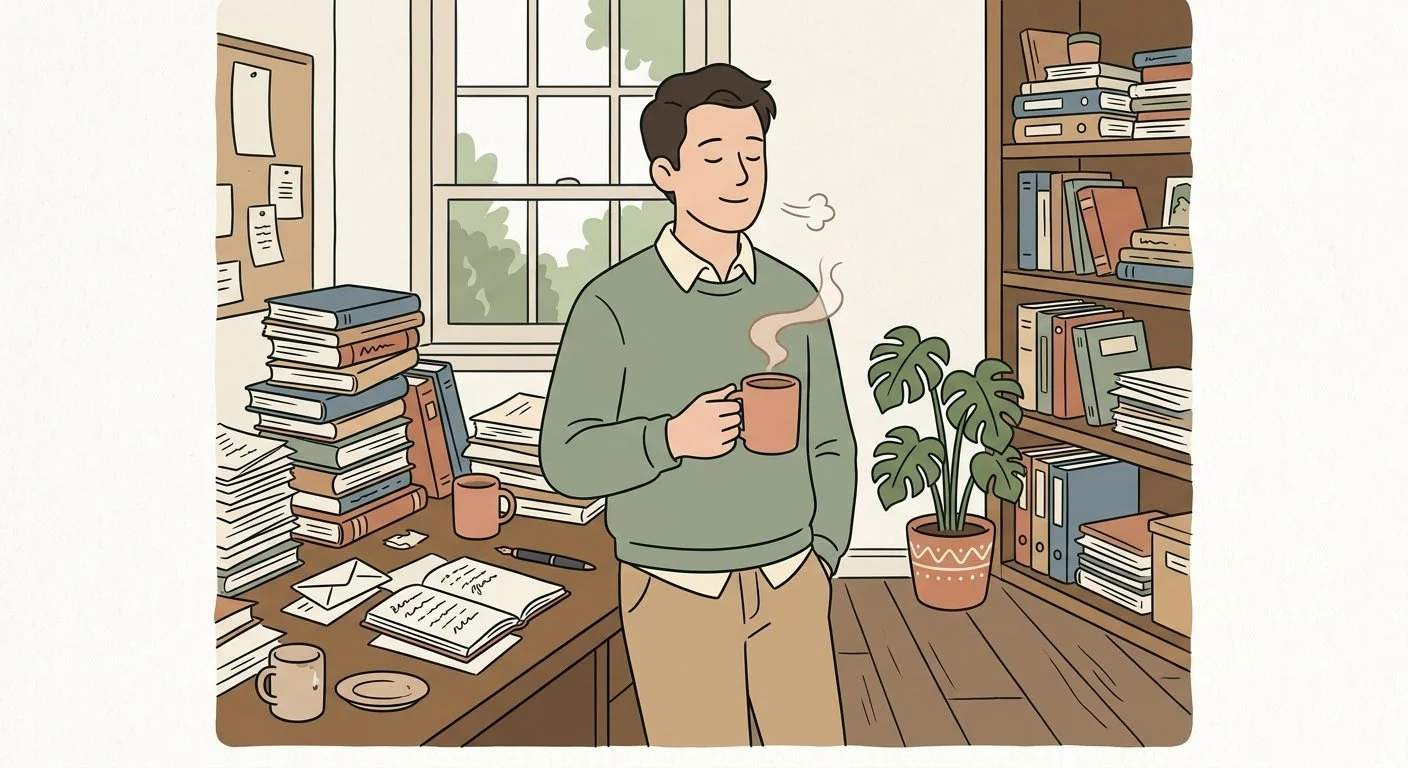
An AI-created image - a simple line drawing of a man taking a moment of peace in a cluttered home office.
Ironically, the balancing act needs balance!
We don’t need to hold everything at once; we just need reliable, structured moments to assess, take a breath, and reset.
Maybe use this as your moment to consider what you balance and the checkpoints that might help you manage the load!
It’s lovely to share a few quiet moments with you today.
Until next time,
💛🌿 Helen
About the Author: Helen Gifford is a counsellor, supervisor, and author of ‘A Practical Guide For Working Therapeutically with Teenagers and Young Adults’.
Support this work: 📕 Order the Book: A Practical Guide for Working Therapeutically with Teenagers and Young Adults ☕ Buy me a toasted teacake: Ko-fi 🌿 Work with me: Clinical Supervision and Training via www.branchcounselling.co.uk