
A Love Letter to a New Therapist
What I Wish They’d Told Us in The Beginning
Dear new (or nearly-there) therapist,
Welcome. Take a deep breath. You made it here.
Whether you are setting foot into your very first lecture room with a crisp new notebook, sitting on the edge of your chair waiting for your first placement client, seeing your first clients as a qualified counsellor, or opening the doors to your own practice, I want to send you a note of encouragement from someone who has sat where you are sitting now, and who has had the privilege of supporting many practitioners along this path.
As the academic year kicks off, the air is thick with back-to-school energy. But while training brochures love to show serene photos of beige therapists looking wisely at generically mildly upset clients in sunlit rooms, the reality of stepping into this profession can feel... a bit more colourful.
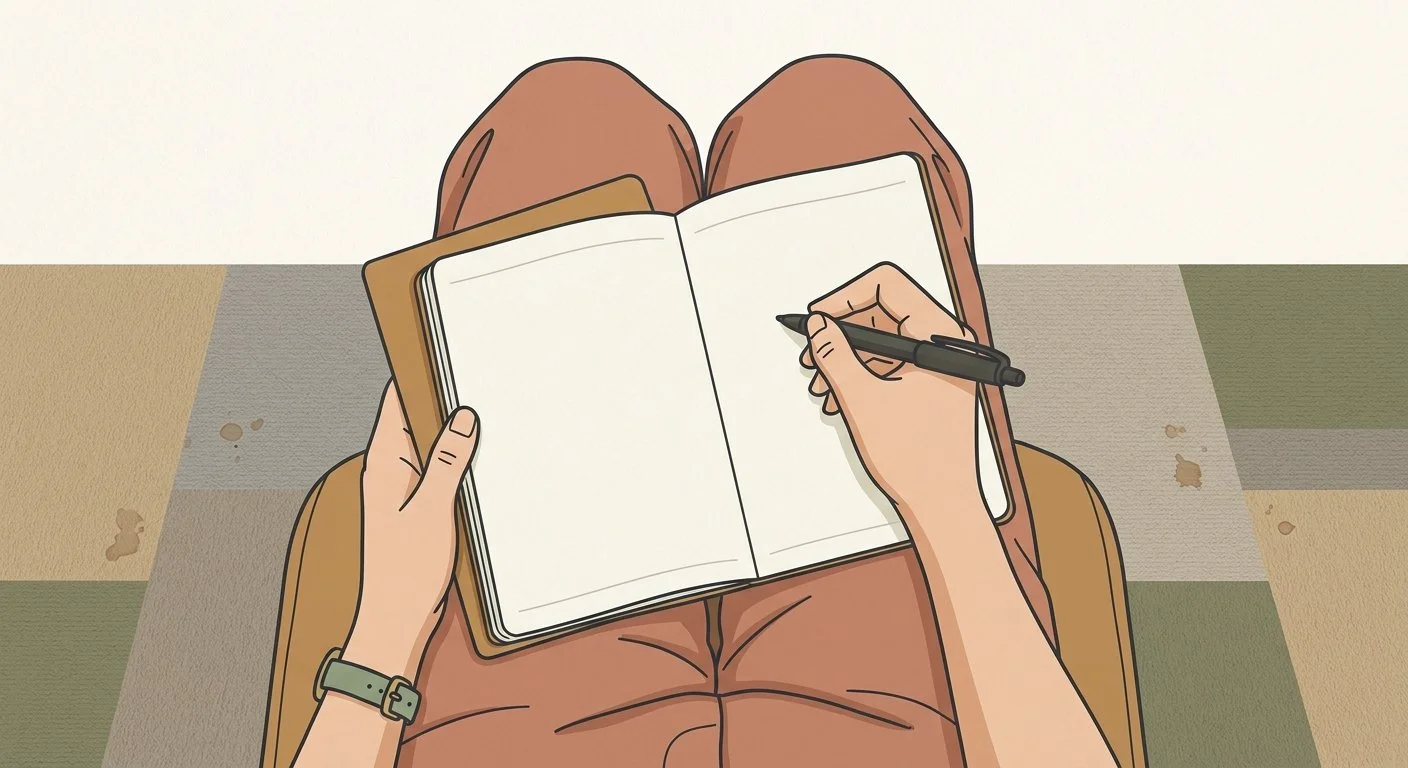
Here are a few things I wish someone had shared with me when I was starting out…
Your course is a foundation, not the whole house
One of the first things you’ll notice, perhaps over a cup of tea in a break room, is the wild disparity in how we all got here. Some students will be on Level 4 diplomas; others arriving with Master’s degrees. Some come from education, health or social care, while others have sat at desks in front of corporate spreadsheets.
Some courses feel like an immersive, rich guidance through models, ethics, and human complexity. Others can feel like monotone walkthroughs of dated PowerPoints and criteria checklists. Some placements feel like warm, supported hugs; others feel like being thrown into deep water without armbands.
If you feel underprepared, please know that isn’t a flaw in you. In fact, good practitioners should always be questioning themselves (sorry, it doesn’t ever fully go away). But more importantly: training only gives you the framework, safety, and ethical bones. The actual art of therapy is something you will curate over a lifetime through CPD, mistakes, supervision, and the real relationships created with the people who sit across from you.
While it takes time to build the house, you’ll also come to realise that we never stop renovating. As researcher and practitioner Will Dobud reminds us, therapy isn’t a static skill we achieve and apply; it is an ongoing, joint exploration.

You may be taught in absolutes. They are rarely absolute.
Teaching and learning therapy is hard because human experience is not concrete. You will encounter conflicting theories, opposing models, and contrasting research.
While ethical boundaries, safeguarding, and professional codes are non-negotiable anchors, theoretical rules are often far more fluid than a textbook suggests, especially when working with real people who don’t fit neatly into diagnostic boxes (a lesson you learn very quickly if you ever work with teenagers!).
If a particular model or rule doesn’t sit right with you, that is okay. Explore it. Research up-to-date thinking. There are amazing practitioners out there right now questioning the traditional “big names”, not to cause controversy, but to push our field toward genuine growth. (You can read more on this here).
The emotional tax on your personal life is real
Apart from the terrifyingly flippant joke that counselling training is “the divorce course,” no one really warns you about what happens to your personal life when you start learning how to support others professionally.
Your eyes open to developmental stages, core beliefs, coping strategies, systemic influences, and generational trauma traits you can simply never unsee. You might find yourself cringing at old family dynamics playing out over Sunday dinner, or feeling slightly disconnected from friends who aren’t as attuned to their internal frames of reference or awareness of others.
Be gentle with your relationships, and with yourself. The personal development that happens on this path can be profound. For some, it is a quiet self-reflection; for others, it brings big life decisions and necessary separations. Lean into your personal therapy, your supervision, your peers, and your tutors to anchor you through the shift.
The myth of the instant, full-time practice
The financial reality of this job is rarely discussed upfront. It is often not until you start hunting for an unpaid placement that you realise counselling isn’t the instant, lucrative career switch you might have hoped. There is a quiet narrative that once you qualify, you simply set up a website and instantly command a thriving, full-time caseload.
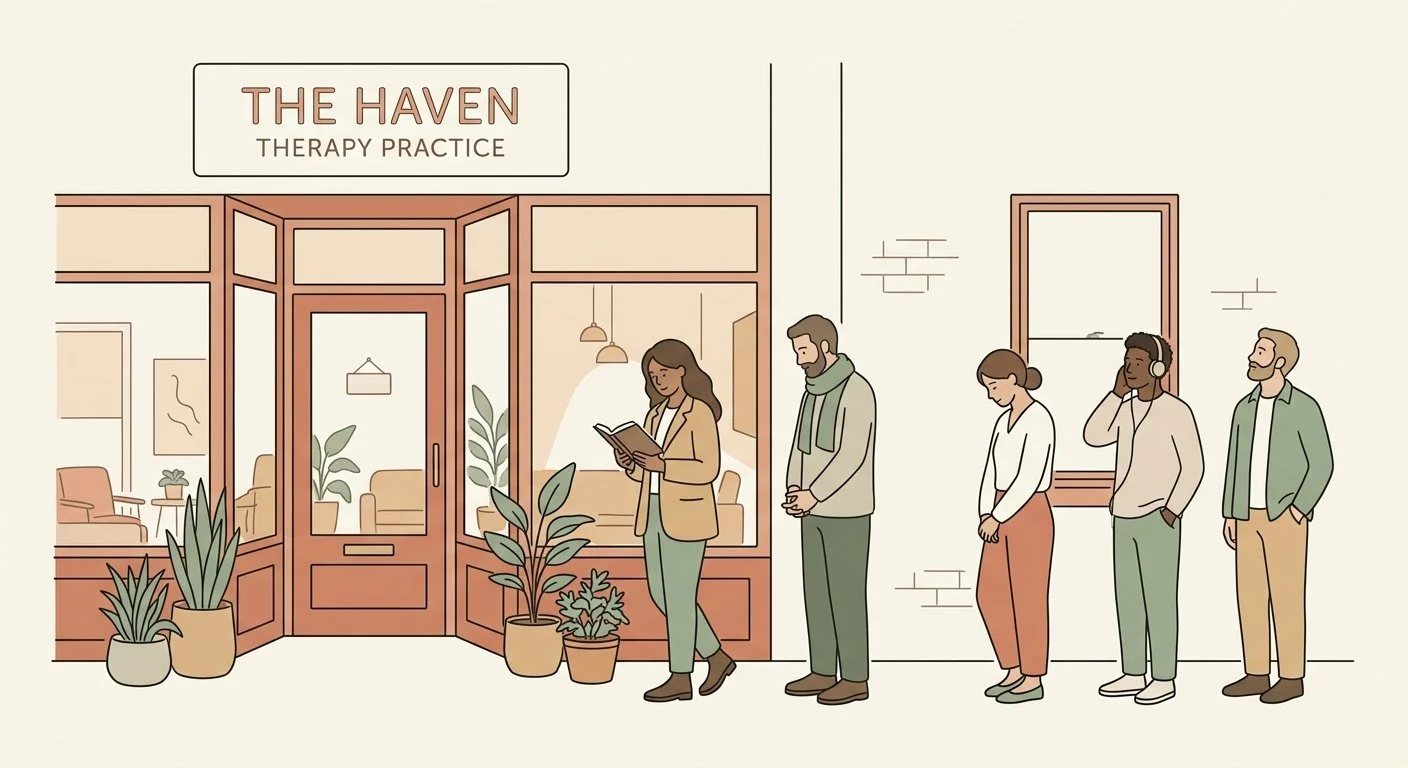
The reality? Third-sector funding in the UK is under immense strain; many charities and community services have lost funding or been forced to close. While there are signs of systemic change, the landscape requires patience.
I will always advocate for gaining experience within an organisation before launching into independent practice, not only to protect your baseline income, but to build your clinical resilience under a wider safety net. Most qualified practitioners take one to two years to build a sustainable caseload, often maintaining a “portfolio career” (combining private clients with sessional agency work or a non-therapy day job).
💡 Note for Trainees:
Building a Portfolio Career: Consider sessional agency work or maintaining a part-time non-therapy role during your first 12–24 months post-qualification. This provides a baseline income shield while your private client base grows organically.
Keeping a steady side income isn’t a failure; it is an act of self-care and sound business sense. You cannot hold space for financial fear and a client’s trauma at the same time.
Your supervisor is your anchor (choose wisely)
Your supervisor isn’t your boss, and they certainly aren’t there to mark your homework or catch you out. A good supervisor is the person who holds you while you hold everyone else. Look for someone with whom you can say, “I had no idea what I was doing in that hour,” without feeling shame.
Remember: it is not rude to interview different supervisors. You do not have to accept the first person you speak to. What you need from supervision will evolve throughout your career; changing supervisors when your needs shift is not disloyalty; it’s good practice. (I explore my own developing supervisory relationships here).
Remember why you walked through the door
This path is demanding, beautiful, uncertain, and deeply privileged work. You don’t need to memorise every piece of theory today. You don’t need to be a finished product. Your presence, curiosity, and warmth are already more than enough to begin.
The true joy of this work is that both it - and you - are always developing.
Welcome to the team. Keep your kettle boiled, check your boundaries, and remember to rest.
Love,
Helen
It’s lovely to share a few quiet moments with you today.
Until next time,
💛🌿 Helen
About the Author: Helen Gifford is a counsellor, supervisor, and author of ‘A Practical Guide For Working Therapeutically with Teenagers and Young Adults’.
Support this work: 📕 Order the Book: A Practical Guide for Working Therapeutically with Teenagers and Young Adults ☕ Buy me a toasted teacake: Ko-fi 🌿 Work with me: Clinical Supervision and Training via www.branchcounselling.co.uk
Author Note & Transparency: All case studies or stories are fully fictitious to illustrate the experiences many professionals face; no confidentiality has been broken. I recommend resources based on a combination of clinical experience and consideration of available evidence. These are offered for interest only and are not endorsements of scientific efficacy or clinical recommendations. Please apply your own critical judgment.