
Beyond behaviour: Lessons from The Lodge and 4:23 AM Epiphanies
Revisiting in-school behaviour support, wilderness therapy principles, and the fine line between support and punishment.
I have written about behaviour before, but indulge me for a moment. Behaviour has historically been big business in education and therapy. While semantics have shifted toward understanding what drives an action rather than just reacting to it, there is still an ongoing push-pull between nurture and punishment. Schools maintain cosy support rooms right alongside cold isolation spaces - and it sits uncomfortably with me how fine the line is in determining which space a young person gets sent to.
I recently attended part of Social Sciences Week, hosted by Dr Will Dobud. I was particularly taken by a compelling webinar by Unda Avota: “Beyond the challenge - when cultural narrative replaces therapeutic goals.”
It reawakened a deep ‘behaviour support’ nostalgia in me.
Fuelled by Will and Unda’s insights, and a dream where I woke up laughing because my former colleague Pete was propelled off a ladder (sorry, Pete)... I felt compelled to revisit my beginnings in behaviour support at “The Lodge”.
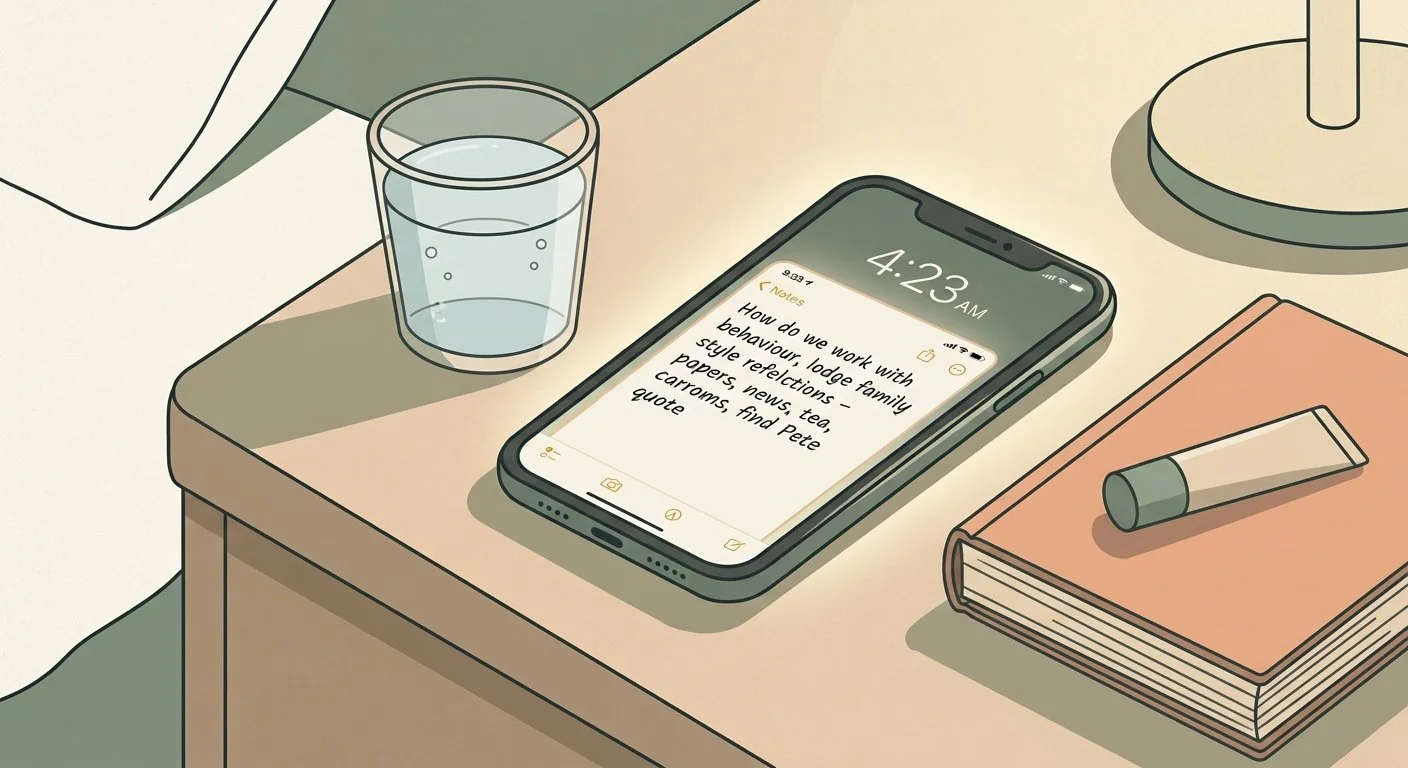
Here is the polished version of my 4:23 AM phone notes.
The Unmet Need Behind the Behaviour
Defining ‘behaviour’ often reminds me of how people discuss having a ‘good baby’, the ‘bad baby’ being the one who fussed, and the ‘good baby’ sitting peacefully, content to be passed around for cuddles.
With developmental hindsight, we know there is no such thing as a ‘bad baby.’ There is only a baby with unmet needs, crying out from hunger, tiredness, discomfort, or pain. Sound familiar?
It costs internal resources to act out, and young people only expand those resources when standard communication tools fail them. Whether a child is 6 months, 6 years, or 16 years old, the underpinning rule remains the same: behaviour is communication, and our job is to listen.
Welcome to “The Lodge”
Around twenty years ago (shudders, still hard to say), after finishing my Psychology degree and alongside my counselling qualification, I started working in school behaviour support in the North East. I was hired by Pete, a giant of a teacher with years of experience and an innate knack for connecting with disaffected youth.
Together, we opened ‘The Lodge’: an on-site Pupil Referral Unit (PRU) for students at risk of exclusion - the proper radgy ones who had done something significant enough to warrant a 5, 10, or 15-day placement with us.
Pete had that lyrical Northern way of weaving words together to leave kids beguiled, combined with artful directness. He brought immense presence, and his storytelling teaching style engaged even the most resistant students. He did what he did best, and I provided the therapeutic frameworks that justified our unorthodox approach to teaching.
We became pseudo-parents, creating a firm, boundaried framework built on safety, containment, and nurture. We believed in our young people when few others did, knowing they’d often been dealt a terrible hand. Not in an idealistic “all kids are pure angels” way, but in an “underneath it all, they’re a canny bairn” way.
In a matter of weeks, we saw accelerated shifts in attitudes and relationships. Looking back through the lens of Will and Unda’s work, I realise we were running a form of in-school wilderness therapy. We didn’t have the mountains, but between 8:00 AM and 3:00 PM on school grounds, The Lodge became a non-residential sanctuary where bonding, resilience, belief, and vulnerability took root. Underpinned by attachment theory and co-regulation, it felt like a quiet revolution.
Papers, Caroms, and Unscheduled Debates
It wasn’t perfect. There were plenty of moments where Pete and I exchanged barely disguised “now what?!” looks. More often than not, friction arose when outside staff invaded our space, unbalancing the tentative family dynamic we had built.
My favourite time of day was the morning. Students who were typically late - or caught smoking behind the bike sheds - arrived early to drink a cuppa and read the morning papers. No screens allowed.
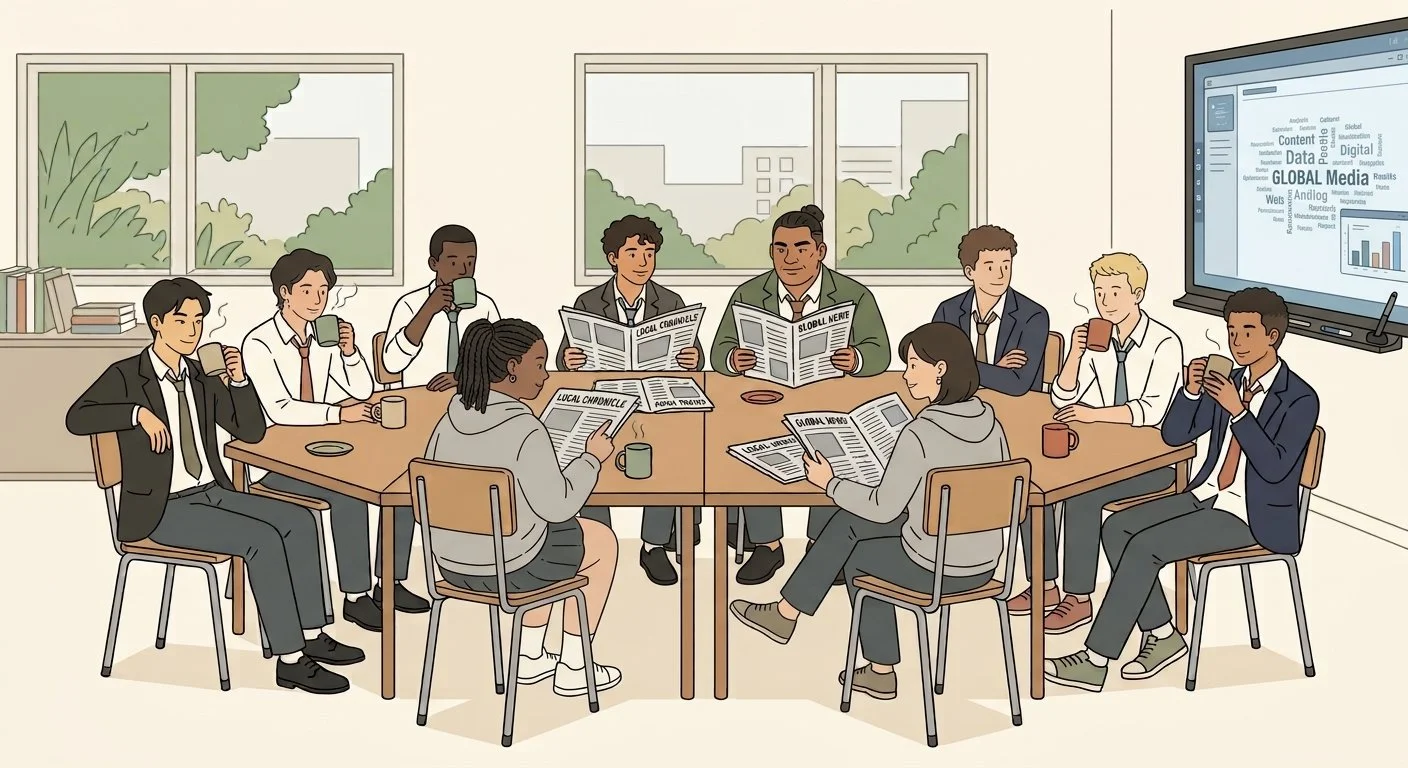
When Madeleine McCann disappeared, newspaper diagrams were pored over on our desks. Through those stories, the group explored parenting, responsibility, and their own childhood experiences. Away from their family dynamics, they began examining right from wrong and defining their personal values. One of my favourite memories was an earnest argument over who got to read The Times first, followed by break times where no one left their chairs because they were engrossed in their Barrington Stoke books (a publisher specialising in super-readable, high-interest/low-literacy books for dyslexic/reluctant readers).
We didn’t just read the news; we watched it. To quote Pete from back then:
“The news raises topics as a matter of routine that might otherwise require a carefully constructed and sensitive plan to bring up with an individual student.
Teenage alcohol abuse, gang violence, sexual health issues, domestic violence, poverty, vandalism, racism, etc. are plonked before us on a daily basis, and in that impersonal context were debated vigorously, providing priceless insight into some of the problems our students face.
So finger on the pause button, and off you go. There will be debate; there will be questions, disputation, outrage and disbelief, the odd row; all guaranteed.”
I have previously shared the work that originated from the lodge in the magic of the Carrom game. If the news opened up narratives, games like Carrom gave us a physical playground to explore them safely. It brought playfulness, teamwork, and a space to test out camaraderie, ask for help, and express big emotions without judgment.
As the classroom began to feel like a family kitchen table, stories were told, and care expanded. Removing young people from their standard routines helped us separate their core identity from their protective trauma responses - giving them a secure base to rewrite their story on their own terms.
Looking Back (and Looking Forward)
Pete was right: we were ahead of our time. If our wings hadn’t been clipped by funding cuts (management never quite warmed to our methods), something even more remarkable might have developed.
I’m curious to hear from those of you working with young people in education or therapeutic settings today. How is the current approach to behaviour unfolding in your world? How is the tension between strict compliance and trauma-informed nurture playing out in practice?
I’ll leave you with my all-time favourite Pete quote:
“Every time a kid tells you to ‘fuck off’, it’s an educational opportunity.”
It’s lovely to share a few quiet moments with you today.
Until next time,
💛🌿 Helen
About the Author: Helen Gifford is a counsellor, supervisor, and author of ‘A Practical Guide For Working Therapeutically with Teenagers and Young Adults’.
Support this work: 📕 Order the Book: A Practical Guide for Working Therapeutically with Teenagers and Young Adults ☕ Buy me a toasted teacake: Ko-fi 🌿 Work with me: Clinical Supervision and Training via www.branchcounselling.co.uk
Author Note & Transparency: All case studies or stories are fully fictitious to illustrate the experiences many professionals face; no confidentiality has been broken. I recommend resources based on a combination of clinical experience and consideration of available evidence. These are offered for interest only and are not endorsements of scientific efficacy or clinical recommendations. Please apply your own critical judgment.
References: Social Sciences Week offers FREE access to 33 hours of CPD resources. If you haven’t taken a look yet, I highly recommend checking it out.