
The UCAS Deadline and the Retirement Party: Why 18 and 65 Feel Exactly the Same
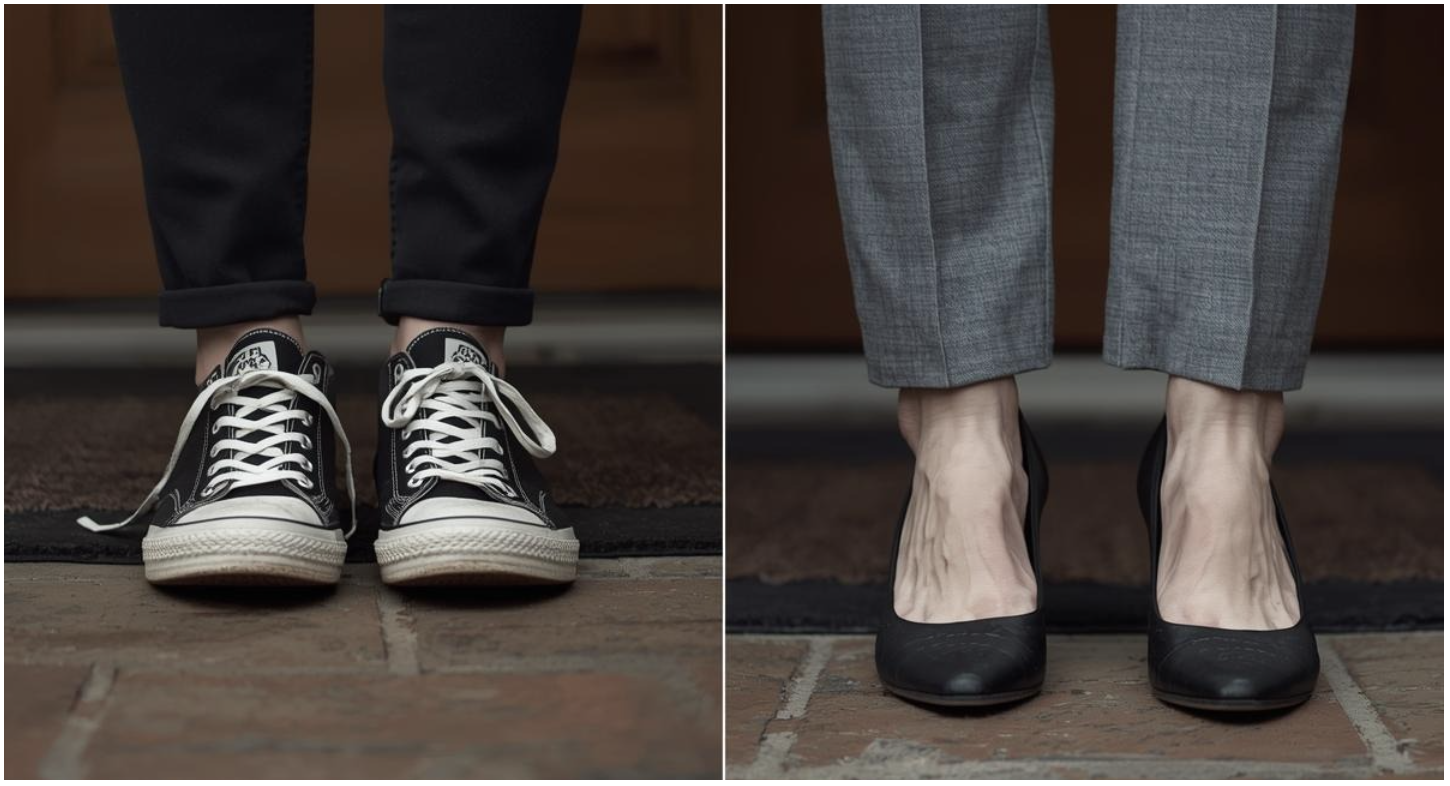
An AI generated image, young shoes on the left and sensible work heels on the right.
Toby had A-Levels looming, but the Christmas break had been filled by a quiet, growing fear. The UCAS deadline wasn’t just a date on a calendar; it felt like a sentencing.
He had created an immaculate personal statement and apparently chosen his “forever career.” But in the cold light of January, it was all very daunting. What person did he want to be, and how could he possibly know that yet? What would bring satisfaction, pride, and fulfilment? Prompted by his Dad’s furrowed brow, the terrified, practical voice at the back of his head whispered: How do you know what will keep you financially secure in five years, let alone twenty?
The deadline had passed. His future was cemented - if, IF he got the grades. Looking around the common room, his friends seemed to have it sorted, calm, chatting, arms flung over the back of the chairs in an exaggerated confidence. As they were soon to be flung to different parts of the country, he didn’t even know if they would still be his friends in a year’s time.
Toby sat in front of Ms Cliff. She’d always had time for him, but today the air in the classroom felt heavy; the safety of her room wasn’t going to be available for much longer.
“I’m not sure I have even picked the right degree,” he blurted out. “Apparently, there are no jobs at the moment. My sister said some people with Master’s degrees can’t even get work.” He looked at her wide-eyed, the fear building as the words tumbled out. “My Mum is worried about the costs, and so am I. I don’t know if I have done the right thing.”
Sandy Cliff smiled. It wasn’t a new worry, but she did think that university wasn’t the golden ticket it used to be. She felt a pang of sympathy for this generation of students, tasked with mortgaging their futures on a guess.
“The problem is, Toby, there is no way for you to know. It is a risk.”
Toby glared at her, horrified. He was waiting for the teacher script: It will be fine, work hard, aim high.
“Look,” she softened her tone, sorry she had fed the fear. “All we can do is try. Everything is an experiment. You have a go. What’s the worst that can happen? You realise it is not for you, you leave, you save three years of your life and find something better. There are so many people who have changed paths; business managers who are now midwives, dentists now yoga teachers, lawyers now teachers.”
She looked up at Toby with a knowing look.
“You, Miss?”
“Yes. It took one term of law to realise I was going to hate it. All the policy and pomp. I realised I loved teaching, so I made a difference in another way. Or, you do something else entirely. You can go to university at any age, it doesn’t have to be now.” She lowered her voice conspiratorially. “No matter what the school says.” Her eyes twinkled.
“I suppose you are right,” Toby said, his shoulders dropping an inch. “It’s a bit scary, but worth a go.”
He wondered how many times Ms Cliff had repeated the same words to other students. There was a comfort in realising he wasn’t the only one feeling this way; it sounded like she had felt this way once, too.
But as Toby gathered his bag, he noticed something. Though she was smiling encouragingly, her eyes looked tired. Sad, even.
“You’re leaving soon, aren’t you, Miss? What are you going to do?”
Sandy was entering her last term of teaching before retirement. After years of wishing for the days of lie-ins and cheap term-time holidays, not having to pretend she liked the overbearing deputy head, she now felt nothing but trepidation, her heart a constant flutter of anxiety.
How would she fill her time? No one would email. No questions, no crises, no need. Who was she, if not a teacher? Were her school staff friends actual friends, or just trauma-bonded colleagues? Would they still invite her out? She wasn’t the pottering-around-the-garden type. Was this it? Just sitting around, gradually getting more old and pointless?
“I’m not quite sure,” she eventually answered, her honesty startling them both.
Toby chuckled. “Same as me then!”
Sandy laughed, a genuine, warm sound. “I suppose the next year is an experiment for both of us.”

Photo by Javier Allegue Barros on Unsplash
Reflections
One of the surprising things I have found in my work as a counsellor is the strange similarity between working with young adults and working with adults approaching retirement.
They are the bookends of our working lives, yet the questions are identical:
What is the point of me?
Do I need a purpose?
What makes me happy?
Who am I without this structure?
What defines my identity?
At both ages, people feel like they should ‘have their shit together.’ And guess what? Neither group does.
It is rare that our lives are easily scripted, despite what careers advisors or pension brochures might tell us. And I, for one, am pleased. It makes my job more interesting, but it also makes life more interesting.
We forget to play once we leave primary school. Sandy Cliff used the word ‘experiment’ with Toby, but I prefer the word play.
We treat our life choices like high-stakes poker games where we are “all in,” when really, we should be treating them like a playground. We should play with ideas, hobbies, places, and people. Self-actualisation isn’t a destination we arrive at; it’s a byproduct of living.
💡 Guidance: How to Navigate the “Void”
Whether you are 18 and looking at a UCAS form, or 65 and looking at a vast, empty calendar, the psychological task is the same: You have to move from ‘Doing’ to ‘Being’.
If you (or someone you support) is in this liminal space, here are three ways to shift the mindset:
1. Lower the Stakes (The “Two-Way Door” Rule). Anxiety thrives when we view decisions as permanent (One-Way Doors). Most life choices—degrees, jobs, hobbies, retirement plans—are Two-Way Doors. You can walk through, look around, and if you don’t like it, you can walk back out. Usually, we have a whole corridor of options.
For the student: You can drop out. You can transfer. You can defer.
For the retiree: You can un-retire. You can volunteer. You can start a business. Nothing is cemented.
2. Follow the ‘sparks’, not just the ‘Goals’. When we lose our structure (school or work), we often panic and try to find a new “Big Goal.” Instead, look for the small things. What small thing brought you a tiny spark of joy this week? Was it cooking? Was it a connection? Was it being outside? Follow the thread of those small joys; they usually lead to the new purpose naturally, without the pressure of a grand plan.
3. Collect Stories, Not Status. If we accept that we can’t control the outcome, we can at least control the narrative. If the degree goes wrong, or the retirement plan is boring, you haven’t “failed”- you have gained a story. If nothing else, living experimentally ensures you will be the most interesting person at the dinner party.
So, be like Toby and Sandy. Admitting you don’t know is the first step. The second step is to start the experiment. Eeeee, how exciting!
💭 Closing Thought
How can you inject more play into your life?
It’s lovely to share a few quiet moments with you today.
Until next time,
💛🌿 Helen
If you’d like to support my work or are interested in learning more about working therapeutically with young people, you can:
📕
Buy my book ☕ Buy me a virtual toasted teacake or cuppa on Ko-fi 💛