
The Sound of a Silent Disclosure:
Why Silence is often the loudest red flag.
Faye had been a social worker long enough to trust her gut, provided she had the time to listen to it. Jay was a tiny bird of a girl who didn’t so much as tweet. Conversations were held in the fragile currency of shrugs and small smiles.
Faye was social worker number five. Reading Jay’s file weeks ago, she had seen the sprawling map of trauma, but she was certain even more was hidden between the lines of the ink and in the shadows of Jay’s eyes. She had finally moved Jay from her uncle’s cigarette-burned sofa into a vetted placement. Michael was a seasoned foster carer; he was “experienced with louder boys,” while his softly spoken wife, Kari, was seen as a “safe space for girls.”
When Faye first dropped her off, she felt a wave of relief. She went home to her Friday night takeaway feeling lighter, convinced the mission was accomplished.
But two weeks later, the anticipated “bloom” hadn’t happened. Jay wasn’t more relaxed; she wasn’t less skinny. As Faye walked in, she found Jay perched on the very edge of the sofa, hands folded, perfectly still except for one finger, frantically picking at a ragged cuticle. It looked almost staged, a tableau of “the good foster child.” Michael stood poised in the doorway, ready to offer a cup of tea
Faye made a snap decision. “I’m taking Jay to Costa, Michael. I’ve been drowning in paperwork; only a caramel cappuccino can fix it.”
Michael’s lips tightened. He looked surprised, but he didn’t argue.
Tucked into a corner of the cafe, safe in the anonymity of the hum of voices and coffee machines, Faye smiled warmly at Jay.

“How are you?”
“Fine.”
“And Michael and Kari?”
“Fine.”
The “fines” were vacant, hollowed out.
“Okay, Jay, my spidey senses are tingling. I think I’m getting the people-pleasing version of you. How about we check how you actually feel?”
A quieter “Fine?”
Faye reached into her bag for the small, worn emotions cards she kept on hand, spreading them on the table between them.
Jay looked at the cards. She reached out and flicked a finger toward ‘Worried’ as if the word itself were poisonous. After a few nervous sips of coffee, Faye softened her voice. She explained that Jay’s opinion was the only one that mattered here. But Jay still looked nervous.
“You don’t have to tell me anything, no facts for now,” Faye almost whispered. “But use the cards. How do you feel in that house?”
Jay’s eyes drifted toward ‘Alone’ and ‘Confused.’ Her hands remained white-knuckled around her mug. Faye nudged the two cards forward, “These?” Jay nodded, wide-eyed.
“Does something feel ‘off’?”
Another nod.
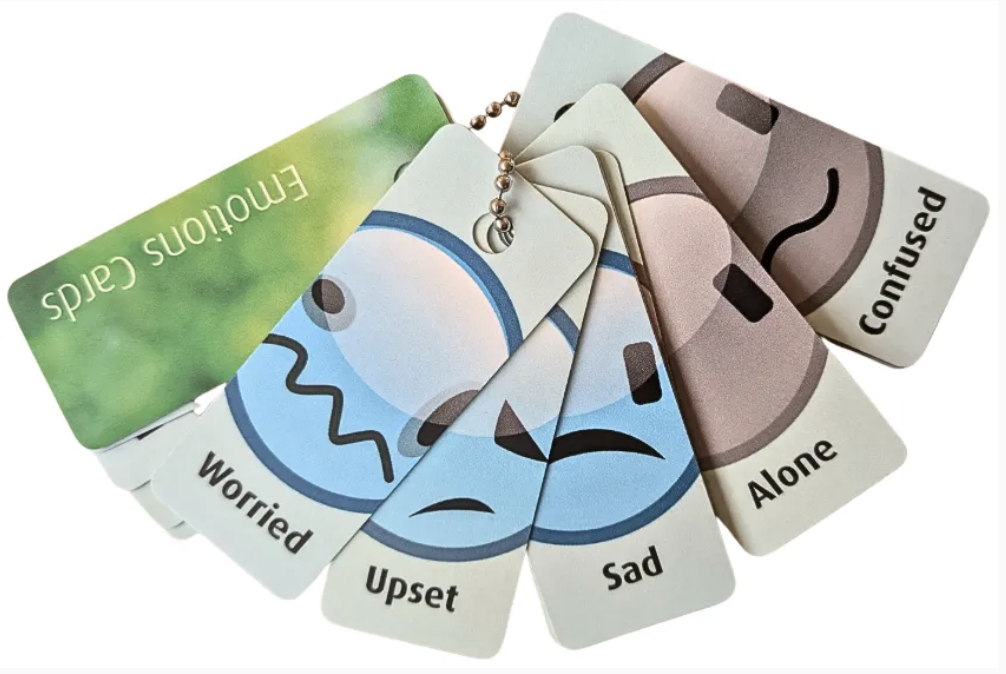
Faye flashed back to Jay perched on the edge of that sofa, waiting like a soldier for inspection. It wasn’t peace; it was performance.
“Are you safe to go back today? You can say no.”
Jay nodded, but the way she chewed the inside of her cheek told a different story. Not immediate physical risk, perhaps, but a profound lack of “good.” Faye mentally noted the paperwork to instigate a surprise visit and considered chatting with the last young person who stayed there.
Forty-eight hours later, Jay was three miles away with Wendy and her chickens. After an investigation, Michael and Kari were removed from the fostering list.
We often think of disclosures as paragraphs of testimony, at least a sentence, or a few clear words. But occasionally, a disclosure is found in the silence, the edge of a sofa, and a chewed cheek. These aren’t the disclosures that make for easy paperwork, but they are the ones that keep you up at night.
If in doubt, act. It is always better to overreact than to under-respond.
📚 Why the Silence is So Loud
We are trained to look for bruises and hear for screams. But Faye’s story reminds us that trauma often sounds like a child being “too good.” In my 20 years of practice, I’ve found that Hyper-vigilance often wears the mask of High Compliance.
Jay wasn’t “settled”; she was “scanning.” She was perched on the edge of that sofa because her nervous system didn’t yet believe the floor was solid. When a child’s behaviour feels like a performance for an audience of one, we have to be brave enough to question the ‘peace’.
If you are a practitioner or a carer, remember: Compliance is not the same as Connection.
📚 Professional Resource Corner: Listening to the Silence
In safeguarding, we don’t just listen to what is said; we listen to what isn’t said. Faye’s “spidey sense” is a vital clinical tool or Professional Curiosity.
Below are the research links and frameworks to help you identify these silent red flags:
“Frozen Watchfulness” or “Compulsive Compliance”: Jay’s stillness is a classic marker of a child in a state of high-alert. Whilst this is a recognised behaviour and one I always look for, I struggled to find a concise description or resource to share (and the Google rabbit hole went deep). If anyone has a good resource, please share it in the comments.
The Compliance Trap: Carer’s “good” behaviour can also be a strategy. The NSPCC defines this as Disguised Compliance, where carers (or children) appear cooperative to avoid scrutiny.
Practising Professional Curiosity: Learn how to look past the surface and ask the “second question.”
Creative Tools for Disclosure: Like Faye’s emotion cards, tools like the Three Houses help children communicate without words.
Final Thought: Pressure Down, Safety Up
When we see a child “frozen” on the edge of a sofa, our instinct is to rush in with comfort. But sometimes, as Faye showed, sometimes the best way to lower the pressure is to change the environment entirely. Moving the conversation to a coffee shop, away from the “six o’clock” of the foster home, gave Jay the physical space to finally exhale.
If in doubt, act. It is always better to overreact than to under-respond.
About the Author: Helen Gifford is a counsellor, supervisor, and author of ‘A Practical Guide For Working Therapeutically with Teenagers and Young Adults’.
Support this work: 📕 Order the Book: A Practical Guide for Working Therapeutically with Teenagers and Young Adults ☕ Buy me a toasted teacake: Ko-fi 🌿 Work with me: Clinical Supervision and Training via www.branchcounselling.co.uk
Note: Faye and Jay are fictitious characters to illustrate an experience many professionals face; no confidentiality has been broken.