
A Moment to Simply Be: Pressure Down, Safety Up
Dealing with overwhelm, for yourself and supporting others
We spend so much of our time leaning forward, into the next task, the next worry, the next number we need to hit. But sometimes, the most productive thing we can do is the exact opposite. The moment we feel the most harassed is when we need to pause.
If the world feels a bit too loud today, or if that familiar hum of panic is starting to build, I’d like to offer you a small, quiet investment in yourself. No pressure, no “correct” way to do it. Just a few seconds to recalibrate.
The Two-Minute Reset
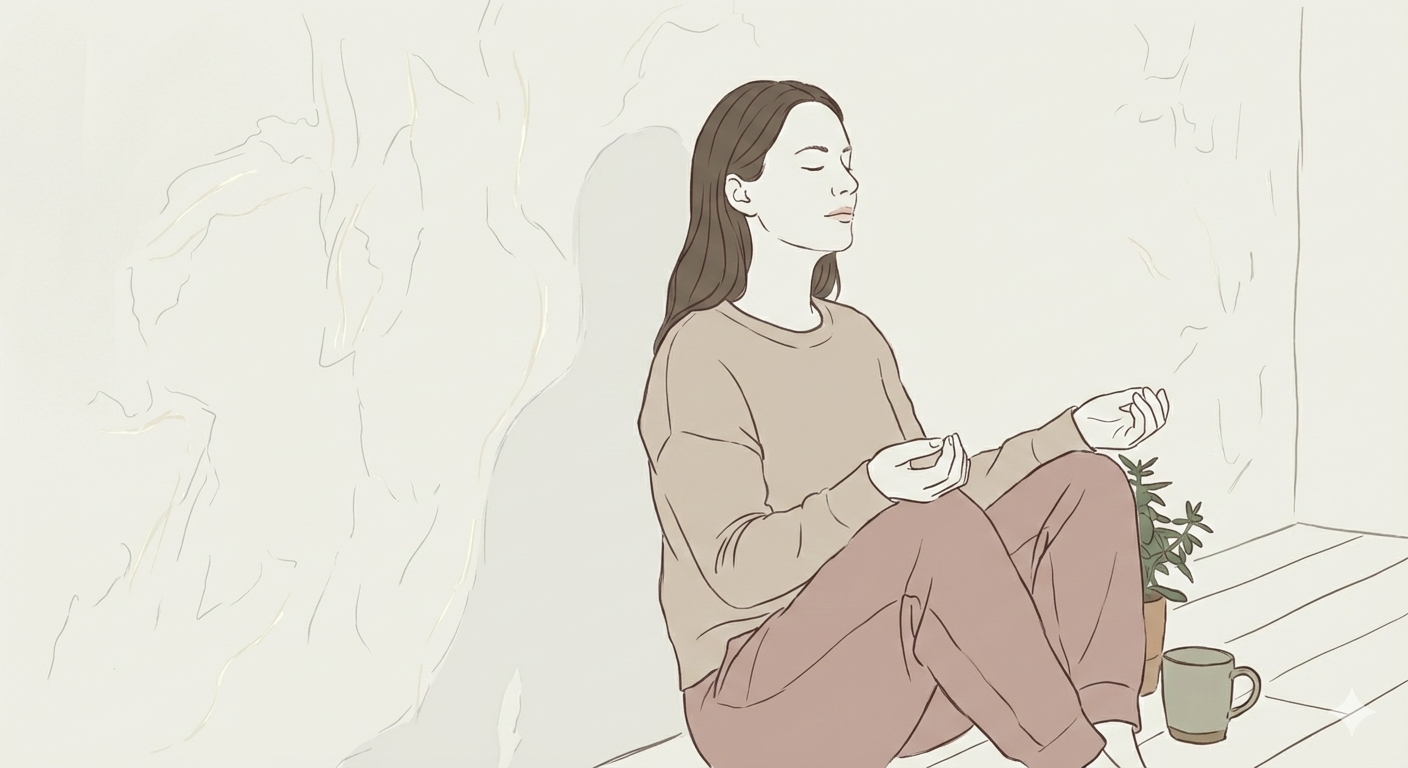
Find a quiet space and sit with your back right up against the wall. Feel the solidness of it supporting you.
Roll back your shoulders. Let them drop away from your ears. Open up your lungs; we have space here to breathe.
Tilt up your chin, just a nudge. There is nothing you need to hide from.
Soften your gaze, or close your eyes. It’s safe to do so. Right now, in this heartbeat, everything is okay. This moment is ours.
Inhale and exhale slowly. If you have a specific method for breathing that you like, use it. But if not? That is perfectly okay, too. You’ve been breathing for years without a manual; you don’t need a guide now. Just take it slow. Feel your body let go with each exhale.
In a moment, you will likely feel the urge to move - to jump back into the “shoulds” or start contemplating things that aren’t relevant to this exact second.
Wait. Your moment hasn’t finished yet. There are a few more exhales to go. Let them happen.
When you are ready... Pull away from the wall. Look around the room. You have the strength to choose your very next small step.
Why the Wall?
Sitting with your back to a wall provides somatic feedback. It’s a way of telling your nervous system that your ‘six o’clock’ is covered; when you don’t have to scan for danger behind you, your front can finally start to soften. It’s a simple, physical way to signal safety to a brain that’s stuck in high alert.
Essentially, we are offering ourselves support on three levels:
Physical safety through the solid contact of the wall.
Cognitive reassurance by reminding ourselves that, in this exact moment, we are safe.
Physiological reassurance through those slow breaths, which act as a gentle ‘manual override’ for our fight-or-flight response.
The Art of the “Cool Head”: Supporting Someone in Crisis
We’ve all been there. I remember being called to a small school office to help a student having a panic attack. When I arrived, the room was vibrating. One friend was hunched over the student, accidentally matching their hyperventilation; one staff member was pacing and debating whether to call an ambulance; another was rushing for blankets and water.
It was a whirlwind of well-meaning chaos. To help the student, I first had to settle the room.
If you are a professional or a carer called into a high-anxiety moment, here is the “Pressure Down, Safety Up” protocol:
1. Clear the Deck
Anxiety is contagious. If a room is crowded, the young person’s brain perceives a “threat” because everyone else is acting like there is one. Gently, but firmly, dismiss anyone who isn’t essential. You need to lower the sensory input immediately; this might also mean turning off a radio or screen.
2. The Medical Quick-Check
Before assuming it’s “just” panic, check the essentials. Does this person have asthma? Are they diabetic? Do they have allergies? Ruling out a physical emergency allows you to commit fully to the psychological work without lingering “what-ifs.”
3. Lower Your Level (The “Six O’Clock” Rule)
Don’t stand over them; it’s a dominant, threatening posture for a panicked brain. Sit on the floor or a low chair, but - crucially - don’t block their exit, or line of sight to the door. A person in flight-or-flight needs to know they aren’t trapped. Keep a respectful distance and offer a simple anchor:
“I’m here for you. We are safe in this moment. We have all the time in the world. No rush.”
4. Become the Anchor
This is where the “Wall and the Breath” come in. Guide them through the grounding steps we discussed earlier. Don’t perform for them; just be with them. Your calm, rhythmic breathing serves as a template for theirs.
5. The “Normalisation” Pivot
Once the physical panic begins to subside, the biggest mistake is to stay too “clinical” or serious. High intensity keeps the pressure up. Instead, pivot to the mundane.
“So, the big question is... what are we having for lunch? I think I’m leaning toward a toasted teacake.”
By shifting the conversation to something low-stakes and everyday, you are signalling to their brain that the “emergency” is officially over. You are inviting them back into the normal world.
Why this works:
Environmental De-escalation: Step 1 reduces the “External Stress.”
Biological Safety: Step 2 provides the “Safety Check.”
Non-Threatening Presence: Step 3 addresses the “Power Dynamic.”
Co-regulation: Step 4 uses your nervous system as a “Brake.”
Cognitive Grounding: Step 5 breaks the “Internal Loop” of panic.
The Final Takeaway
Ultimately, our role in these high-stakes moments isn’t to “fix” the panic or provide a clinical cure on the spot. It is to lend the person our own calm until they are regulated enough to find their own. By stripping away the audience, lowering our level, and normalising the environment, we move from a reactive crisis to a shared moment of recovery.
Remember the mantra: Pressure down, safety up.
⭐️If you’d like a free downloadable PDF of this to keep to hand, find it here. ⭐️
I hope you can carry a little of that “safety” with you into the rest of your day.
Until next time, 💛🌿 Helen
Support my work: 📕 Buy my book: ‘A Practical Guide For Working Therapeutically with Teenagers and Young Adults’. ☕ Buy me a virtual toasted teacake or cuppa on Ko-fi.
Author Note & Transparency: This post is for interest and grounding purposes only and is not a substitute for clinical advice or emergency mental health support. Please apply your own critical judgment.