
The Environment is Not a Diagnosis:
A response to an Evolving Psychiatry interview with Allen Frances.
Are we medicating social problems?
Are diagnoses causing more harm than good?
Are we missing those who need the most help?
Is AI taking over the therapy profession?
Topher10 shared a podcast with me, and because I had a few things to say, here we are:
Is AI taking over the therapy profession? I recently listened to an Evolving Psychiatry interview/podcast with Dr Allen Frances, the renowned psychiatrist who chaired the DSM-IV task force. Listening to Frances discuss the current state of mental health, diagnostic inflation, and the sudden influx of artificial intelligence gave me a space to reflect on my thoughts, reassuring my belief that therapy will always have space for humans.
Systems Over Symptoms: The GP Dilemma
I agree wholeheartedly with Frances’s critique of the modern medical model. Too often, GPs resort to handing out medication without considering the wider picture. But let’s be entirely clear: the blame does not lie with individual GPs. This is a massive, systemic failure.
When a doctor has mere minutes with a patient, a prescription pad is often the only tool within reach. Yet, more often than not, the actual solution to a patient’s suffering lies in practical, real-world security: stable housing, financial safety, community, or relational therapy.
There is a distinct cultural divide here between the UK and the US:
The US Model: Heavily clinical, diagnostic, and deeply profit-driven. It relies on a rigid framework of matching every symptom to a pill.
The UK Model: While strained, we have built frameworks that begin explore the breadth of life. The introduction of social prescribing is a fantastic example of the wider support systems we can, and should, be building upon.
As practitioners it is important we hold this in mind, whilst the medical model is often prominent it is not the only framework to consider and we often have the luxury of bigger picture thinking.
Refinement, Not Dismissal: The Crisis Triage Problem
Language is complex, a point highlighted beautifully in the podcast. I see both immense benefits and distinct issues with diagnostic and self-diagnostic labels. However, the solution to this complexity is refinement/addition and systemic change, not completely dismissing clinical language.
France suggests saving the terminology for those in true clinical need. My only pushback against Frances is the idea that we should strip away mental health support from the general public to focus entirely on those “truly in need” or in severe crisis. While resource allocation is critical, this “take from the rich to give to the poor” concept is far too simplistic. The reality of clinical practice is infinitely more complex.
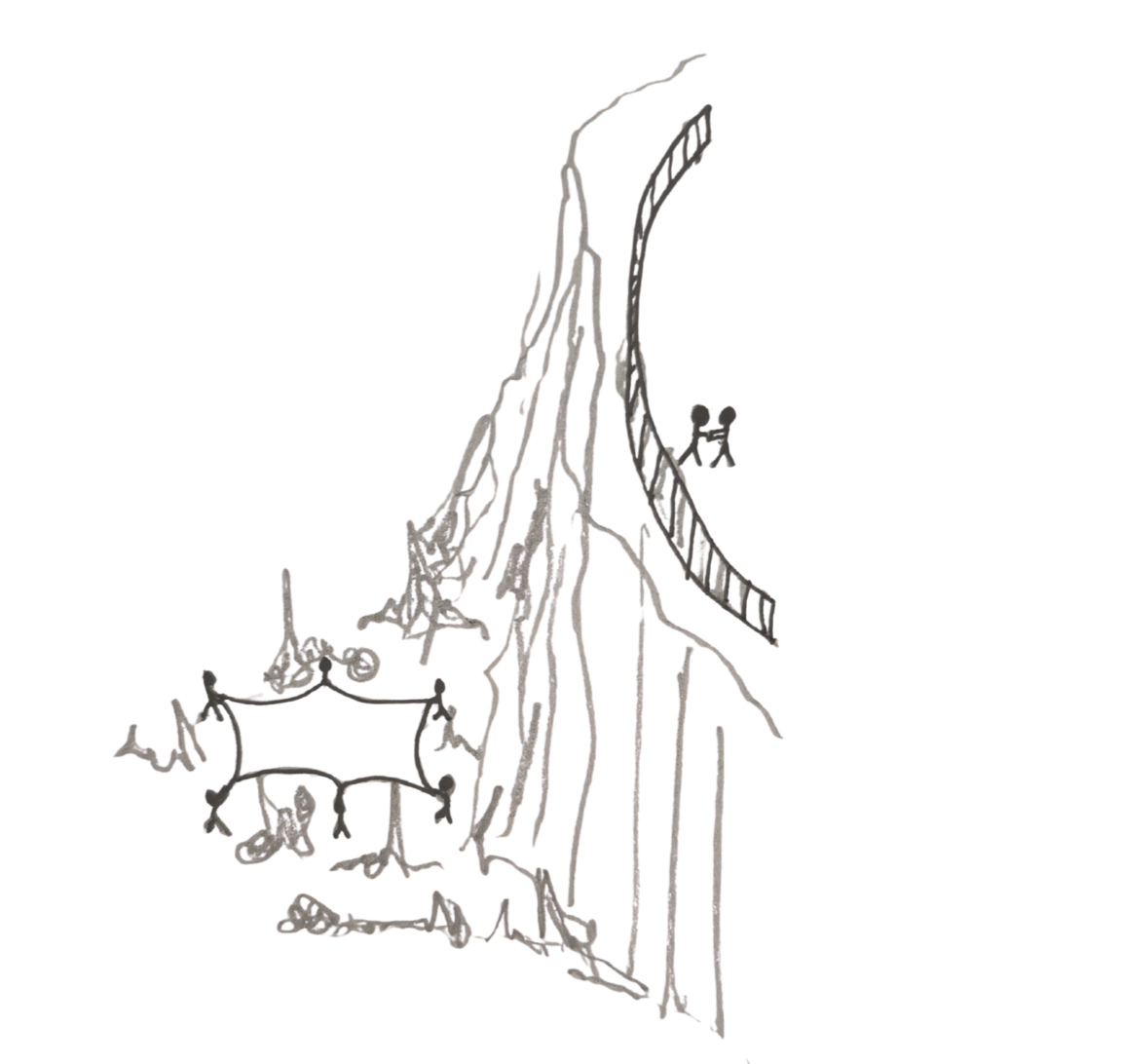
If we only fund resources for people already in crisis, we are operating entirely reactively. We are just throwing out some mattresses at the bottom of a cliff. Working proactively means catching people before they fall, which is the only sustainable way to reduce the number of people entering a crisis state in the first place. We see this play out in smaller community spaces (I’m thinking here of my personal experiences working in schools), and the same is true worldwide.
“Is the Environment Shit?” (Normalising Macro Stress)
Allen Frances speaks strongly against diagnostic inflation, the tendency of modern medicine and society to turn normal human suffering into a mental illness.
Look around us. We are living through the collective stress of rapid AI expansion, global warming, an ongoing financial crisis, and political leaders making actively harmful decisions. On top of that, we carry the constant, digital knowledge of everyone else’s stress.
As I have spoken about, living in this world and feeling stressed is a completely normal human reaction. It is not a clinical diagnosis. Or the less eloquent quote I prefer: before you diagnose someone with stress, depression, or anxiety, check first that their environment is not shit. Suffering in a broken system is a sign that your internal alarms are working, not that your brain is broken. There is a problem, and the consequences feel the same, but the trigger is external, not internal.
The AI Paradox: Fire, Fear, and the Human Sync
Artificial intelligence is simultaneously fascinating and terrifying, brilliant and lacking, incredibly helpful and deeply dangerous. Like every major tool humans have ever created, stretching all the way back to the discovery of fire, we desperately need a greater understanding, strict rules, and robust security before it can be safely integrated into our lives.
With any tool, we must understand how it works, but more importantly, how humans interact with it. Because a small percentage of people will always use a tool maliciously, AI is inherently dangerous. However, we cannot let a fear response dictate how we view its entire application.
Yes, AI has already been used for dangerous, unregulated mental health support, and vulnerable people have tragically been harmed or lost their lives. This absolute lack of guardrails requires an immediate, heightened crisis response from policymakers. The problem stems entirely from financial gain, unethical marketing, and a lack of regulation. Policy is always lagging behind tech, just like when a new drug is created, and it takes years to be studied, regulated, and understood. However AI has also been helpful in low stress situations, like a reflective diary. We can’t forget the countless times this will have offered some help.
But here is the hopeful truth I see from working directly with young adults and adults: young people are not all pulled toward these digital tools for emotional support. Just as I saw during the COVID-19 lockdowns, young people were the most resistant to video therapy sessions and the quickest to demand a return to face-to-face work. Young people are often very aware of the dangers of technology, especially the risk of exposure.
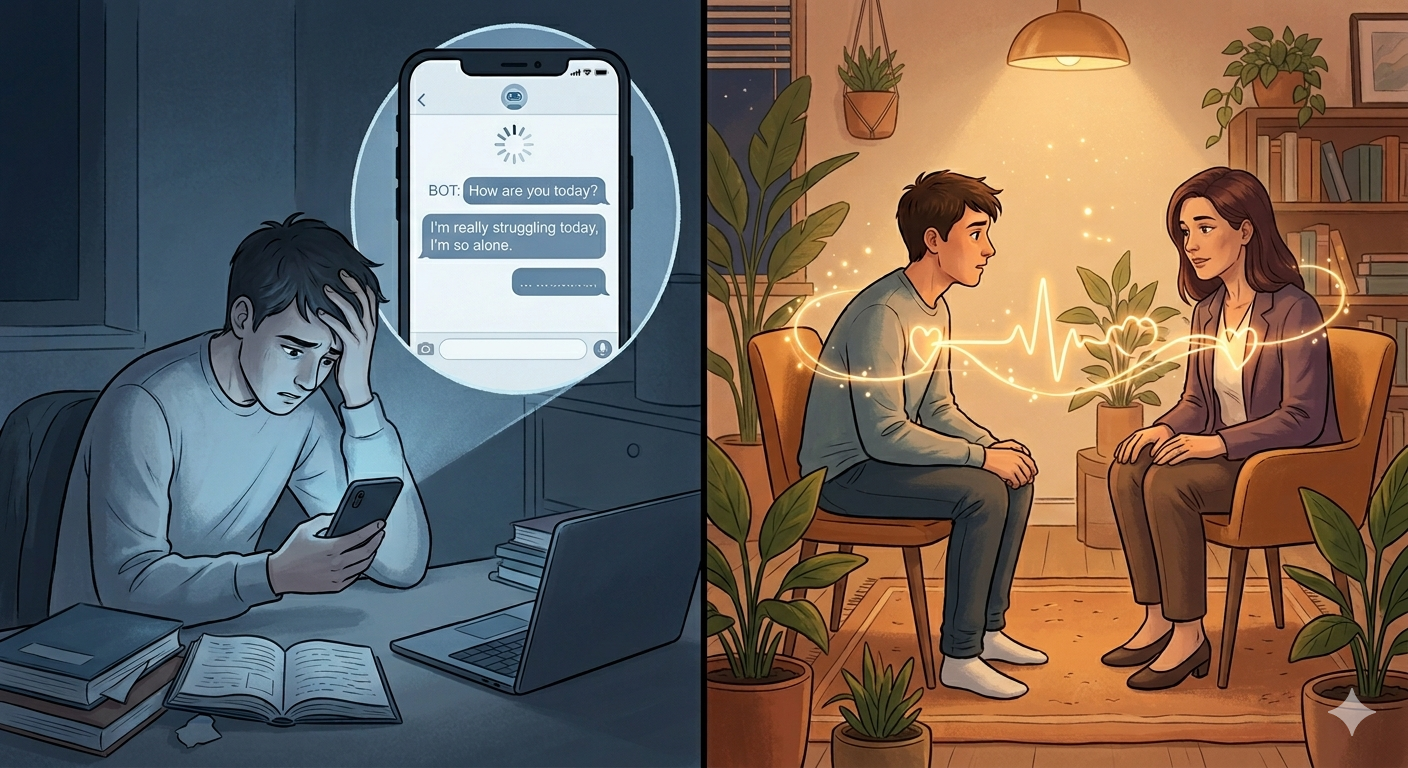
Frances highlights a critical concept here regarding AI’s dual utility: it might offer mild, basic tips for everyday stress, but it is potentially catastrophic when applied to deep emotional vulnerability. Chatbots are programmed to please the user; they are designed to maximise your screen time. Because of this, they are entirely incapable of safe clinical challenge, handling human nuance, or guaranteeing true confidentiality. Young people are highly aware of this lack of security, and they are also the ones who will suffer most as entry-level jobs are swallowed by automated systems.
Humans fundamentally need other humans. We crave validation, physical synchronisation, deep emotional understanding, and shared, real-world experiences.
Moving Forward with Active Awareness
Ultimately, Allen Frances strikes a vital balance: there is potential value in both medication and AI, but both are incredibly dangerous when wielded carelessly. He isn’t calling for a Luddite destruction of tech or a total abandonment of psychiatry. Instead, he is calling for correct, ethical utility.
We need to take the next few years to rigorously study, regulate, and understand what comes next. As clinicians and supporters, we cannot allow ourselves to become completely depressed or paralysed by the changing landscape. Instead, our job is to take localised action, raise awareness, encourage discussion with clients and professional peers, and continue to provide the safe, messy, un-automatable human spaces our young people actually want.
It’s lovely to share a few quiet moments with you today.
Until next time,
💛🌿 Helen
About the Author: Helen Gifford is a counsellor, supervisor, and author of ‘A Practical Guide For Working Therapeutically with Teenagers and Young Adults’.
Support this work: 📕 Order the Book: A Practical Guide for Working Therapeutically with Teenagers and Young Adults ☕ Buy me a toasted teacake: Ko-fi 🌿 Work with me: Clinical Supervision and Training via www.branchcounselling.co.uk
Author Note & Transparency: I recommend resources based on a combination of clinical experience and consideration of available evidence. These are offered for interest only and are not endorsements of scientific efficacy or clinical recommendations. Please apply your own critical judgment.